You do not have a connected system.
Tickets, QuickBooks, ADP and other tools exist — but approvals, automations and handoffs still happen manually.
Software development
We build one system around the way each part of your company actually works: clear, offline-ready tools for the field; connected workflows and automations for the office; and live dashboards, reports and key metrics for the executive team.
Midland, TX / Denver, CO
If information is being re-entered, checked in spreadsheets and pulled together by hand, the problem is not your people. The problem is the stack.
The workarounds are the signal.
Tickets, QuickBooks, ADP and other tools exist — but approvals, automations and handoffs still happen manually.
Each platform gives you part of what you need. Your team builds the rest with spreadsheets, texts and workarounds.
The numbers live across systems and files. Pulling a real report still takes manual calculations and cleanup.
Some subscriptions are worth keeping. Others make more sense to replace with a platform built around your business.
From one focused workflow to a complete operating platform, these are the four categories where we create the most value for oil & gas teams.
Tickets, work records, dispatch, hauling, procurement, approvals, third-party work, assets and pricebooks.
Offline-ready workflows that let crews capture the job once, correctly, at the source.
Live operational views, board-ready reporting, forecasts, KPIs and financial visibility.
Connect the new workflow to billing, payroll, accounting, telematics, customer portals and legacy systems.
Build what matters. Connect what stays.

Software crews actually use creates cleaner data that can be billed right the first time.
Simplicity and clarity are part of the software. We design the workflow so crews can capture the right information quickly — even where service is unreliable.
Offline workflows that upload when the device reaches signal or Wi-Fi
Easy interfaces with locks, checks and permissions to reduce bad data
Supervisor or office approval processes built into the workflow
Daily ticket sign-off from the company man
Photos, forms and approvals kept together with the ticket
GPS tracking data added to tickets when needed
The goal is not to get clean data and then manually re-enter it into OpenTicket, OpenInvoice or another system. We connect the software we build into the billing and administrative process so the information moves forward without duplication.
No re-entry. No duplicating work.
Pass approved field data into invoicing and customer submission workflows.
Connect time, job, employee and cost information to the systems that handle the books and payroll.
Combine crew activity, equipment data, GPS and job information instead of checking them separately.
Keep platforms that still matter and automate the handoffs around them.
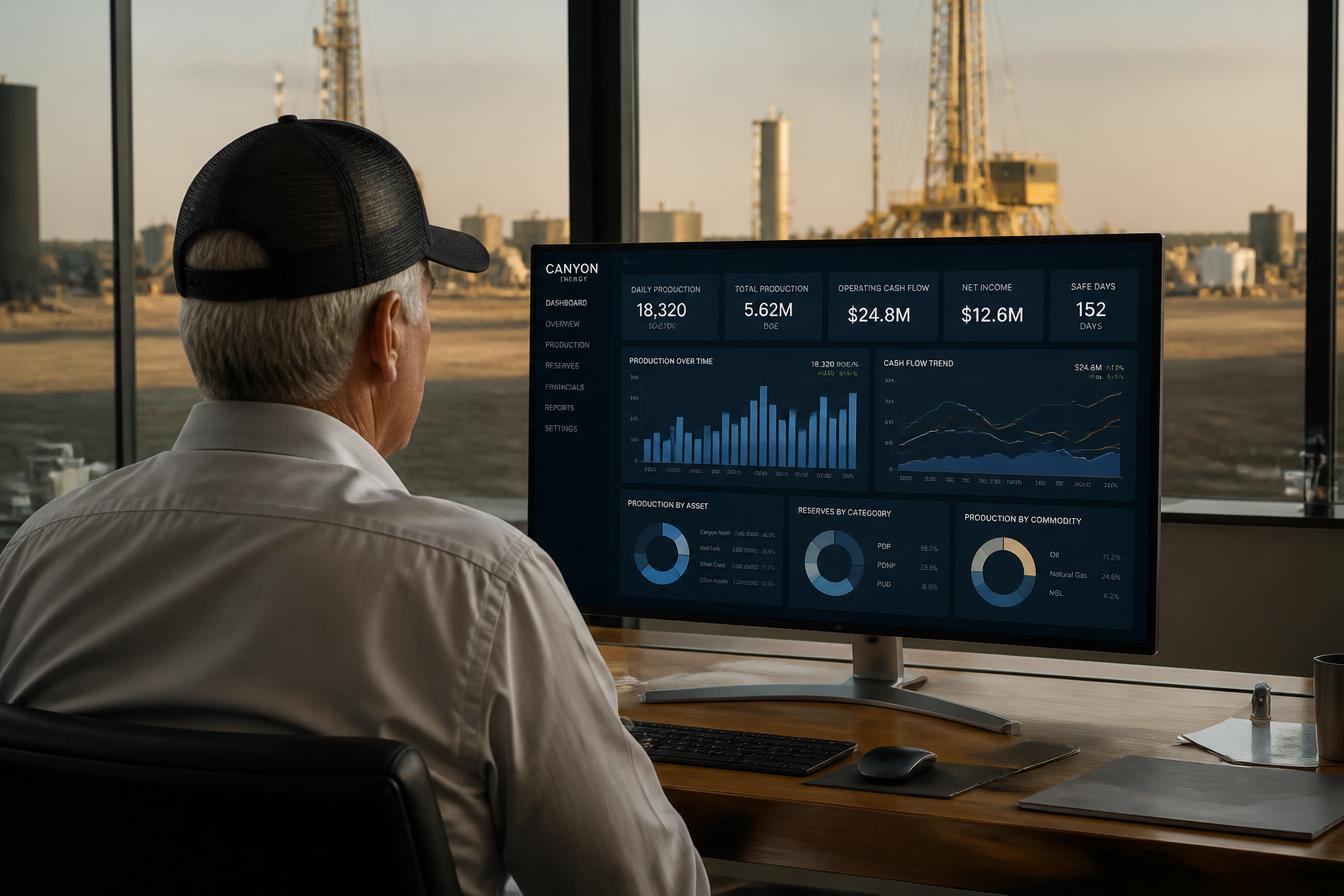
Your executive team should not have to ask IT to pull data from three platforms, five spreadsheets and a set of manual calculations. We build dashboards and reporting around the questions each leader is responsible for answering.
CEO
Key investor insights, trends, forecasts and the operating picture for next quarter.
CFO
Real-time numbers, estimates, job profitability and board-ready financial reporting.
COO
Schedule visibility, current bottlenecks and problems coming up as they happen.
Shared leadership view
Live dashboards, custom KPIs and one trusted source for the metrics that matter.
For the right systems, replacing recurring software rent with a company-owned platform can change the economics completely.
Rented software
Replace recurring subscription spend with software built around your business.
Qualifying development costs may create additional tax savings.
You own the workflow, code, data model and operating leverage the software creates.
The software is only useful if it creates value for every stakeholder it touches. That is why the first step is understanding the operation before we define the product.
We sit with the stakeholders across the company — from the executive team to the field crew — to understand how the work actually moves. This is where we learn what each person needs from the software, where information breaks down and how each department functions today.
We turn the findings into a clear first release: workflows, users, approvals, data, automations and integrations. The MVP gives everyone something concrete to react to and creates clear expectations for what we are building.
We meet with clients every week to demo what has been built, review what is complete and show what is next. You always know what is being worked on, and you get chances to review and adjust the system as it takes shape.
We work with every stakeholder the software touches to walk through the new flow of work. We train the field, office and leadership teams so everyone understands what changes, what stays the same and how to use the system correctly.
We remain available for bug fixes and, if desired, ongoing refinements, additional automations and new features. The system can keep evolving as the operation grows and new opportunities to remove friction appear.
Case studies should lead with the business outcome — not the software feature list.
$132K
300+ employee industrial operation. Multiple systems retired. Manual processes automated. Software owned outright.
1→1
Field workflow connected to approvals and accounting. Less re-entry. Faster billing.
1 view
Operations, finance and executive reporting in one clear view.

We can help you sort what to keep, what to connect and what to replace with software that fits the way your company actually runs.
Explore IT servicesOperational software • field apps • dashboards • integrations
Built for operators. Built for leadership.